
Every period means using something. A pad, a tampon, a liner — most of it gets used once and then binned. Do that every month for years and it adds up to a lot of trash. Reusable sanitary pad products flip that script. Wash them, store them, use them again next month. Simple idea. But does it actually cut down on waste? Mostly yes, though not in some magical, guilt-free way. It depends a lot on the product, the material, how it's washed, how long it lasts, and what happens to it once it's finally done.
This piece breaks down how reusable period products cut down on waste, where they genuinely help, where the claims get oversold, and what actually matters when picking one.
Why Does Menstrual Waste Matter?
The Problem With Single-Use Period Products
Pads, tampons, liners — most are built for one use and then straight into the bin. Each one usually comes wrapped in its own bit of plastic, packed into a box, shipped somewhere. Multiply that by every cycle, every month, for however many years someone menstruates, and the pile gets big fast.
And it's not just about how many products get used. The packaging, the materials, how they're made, how they're shipped, how they're thrown away — all of it counts. People tend to focus only on the "used one pad" part and forget the rest of the chain.
Why Period Waste Is Produced Every Month
This one's obvious once it's said out loud: periods come back every month, so the waste does too. It's not a one-off purchase like a phone that lasts three years. It's buy, use, toss, repeat — on a loop that doesn't stop until menopause. That's what makes period waste different from most other household trash. It's baked into a routine, not an occasional thing.
What Makes a Menstrual Product More Sustainable?
Being reusable doesn't automatically make something the "green" choice. A cheaply made reusable pad that falls apart in four months and gets thrown out isn't doing anyone any favors. What actually matters:
How many times it can genuinely be reused
How long it lasts before it wears out
What it's made from
How much washing it needs (water, energy, detergent)
Packaging
How it's manufactured
What happens to it at the end
So no, "reusable" isn't a free pass. A product only earns that label if it's made well, used properly, and lasts.
What Are Reusable Menstrual Products?
These are period products built to be used more than once — cleaned and stored between cycles instead of tossed after a single use. Depending on the product and how well it's looked after, that can mean months or even years of use out of one item.
Reusable Sanitary Pads
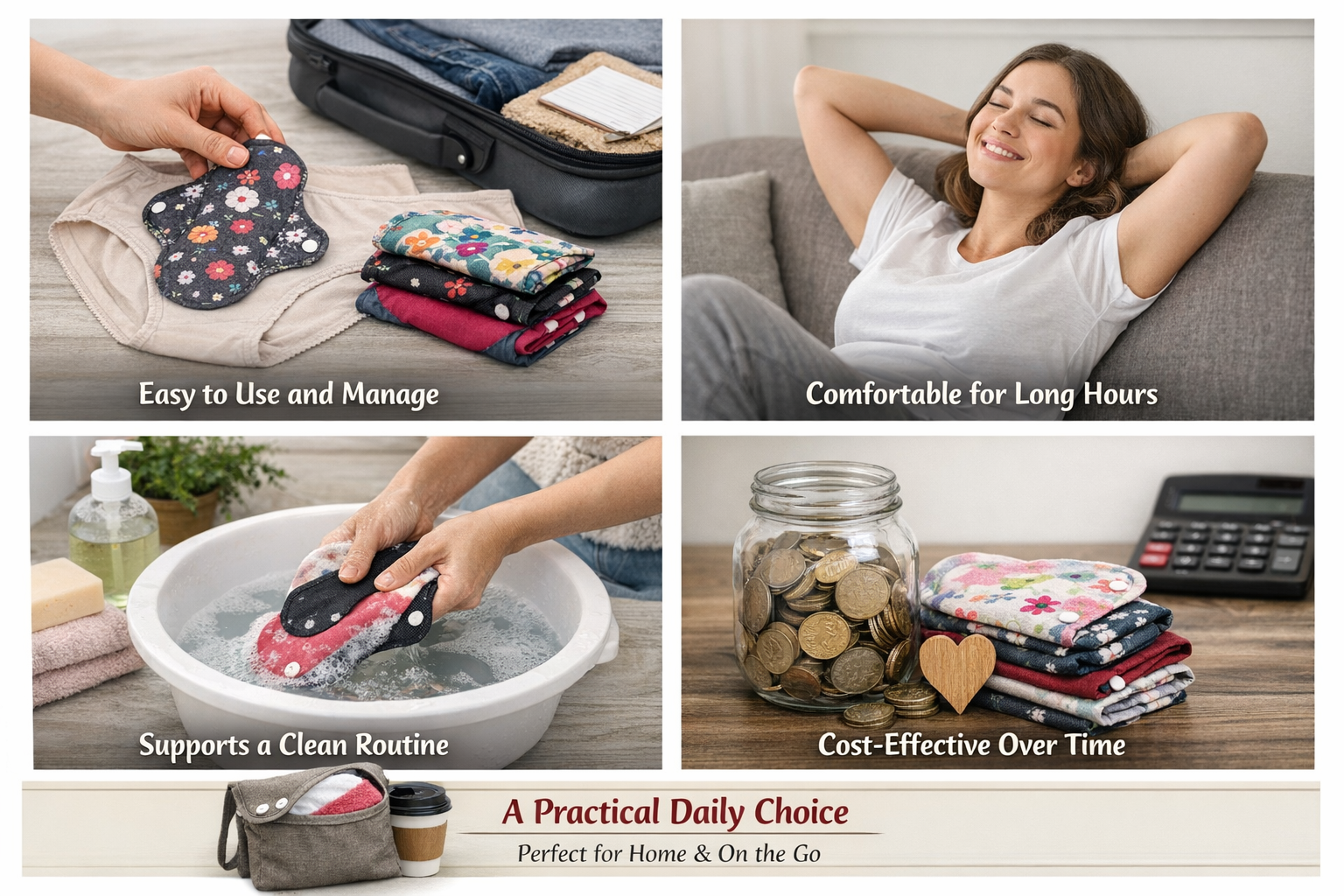
Washable pads. Same basic idea as disposable ones — different absorbencies, different sizes — except these get washed and reused instead of thrown out. They only work well if they're actually washed and dried properly between uses, which is where a lot of people slip up early on.
Menstrual Cups
A small reusable cup, usually silicone, that sits internally. Needs cleaning between uses and, depending on the brand, can be reused for a long stretch. Cups tend to have a steep learning curve at first — most people who give up on them do so in the first cycle or two, before they've actually gotten the hang of it.
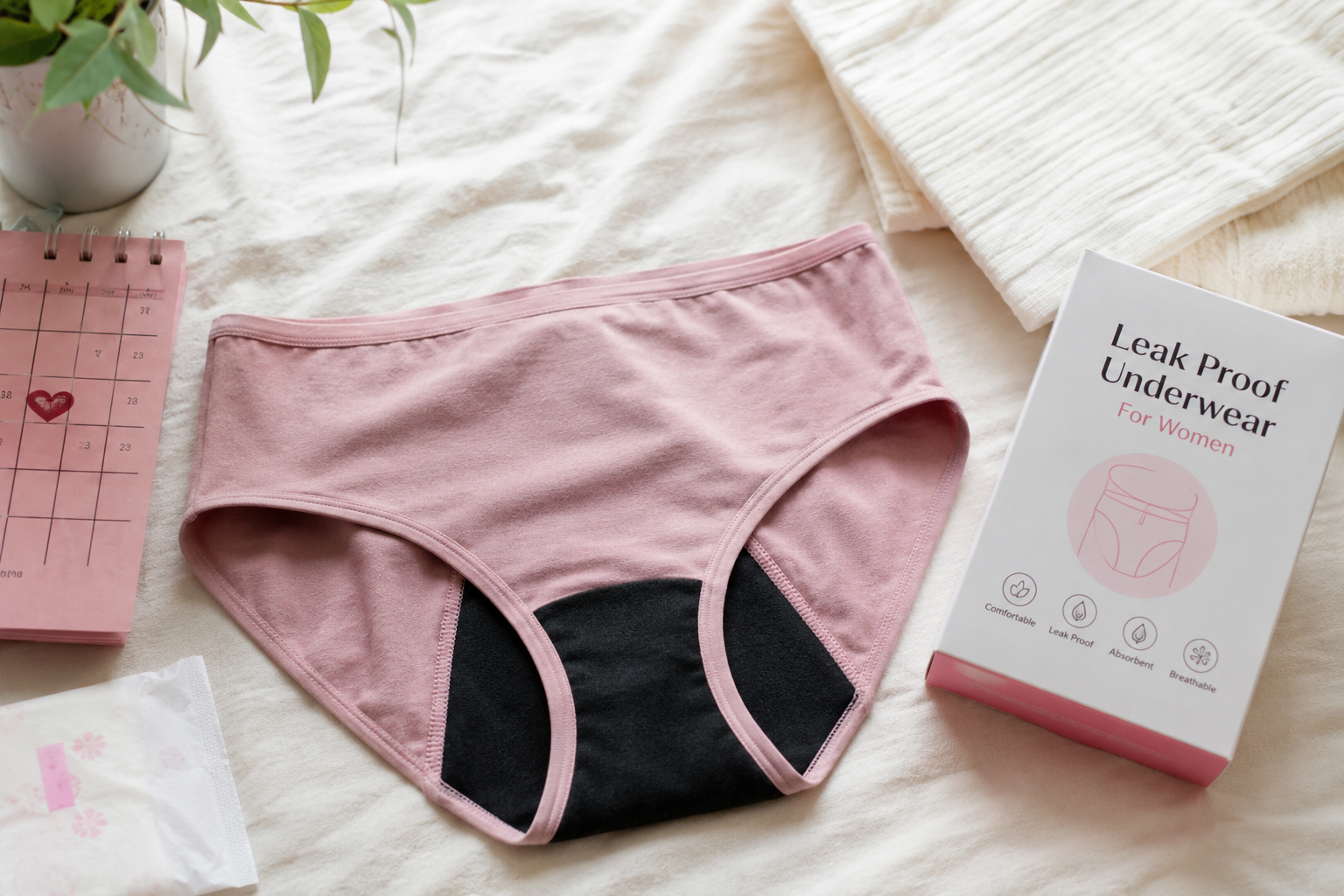
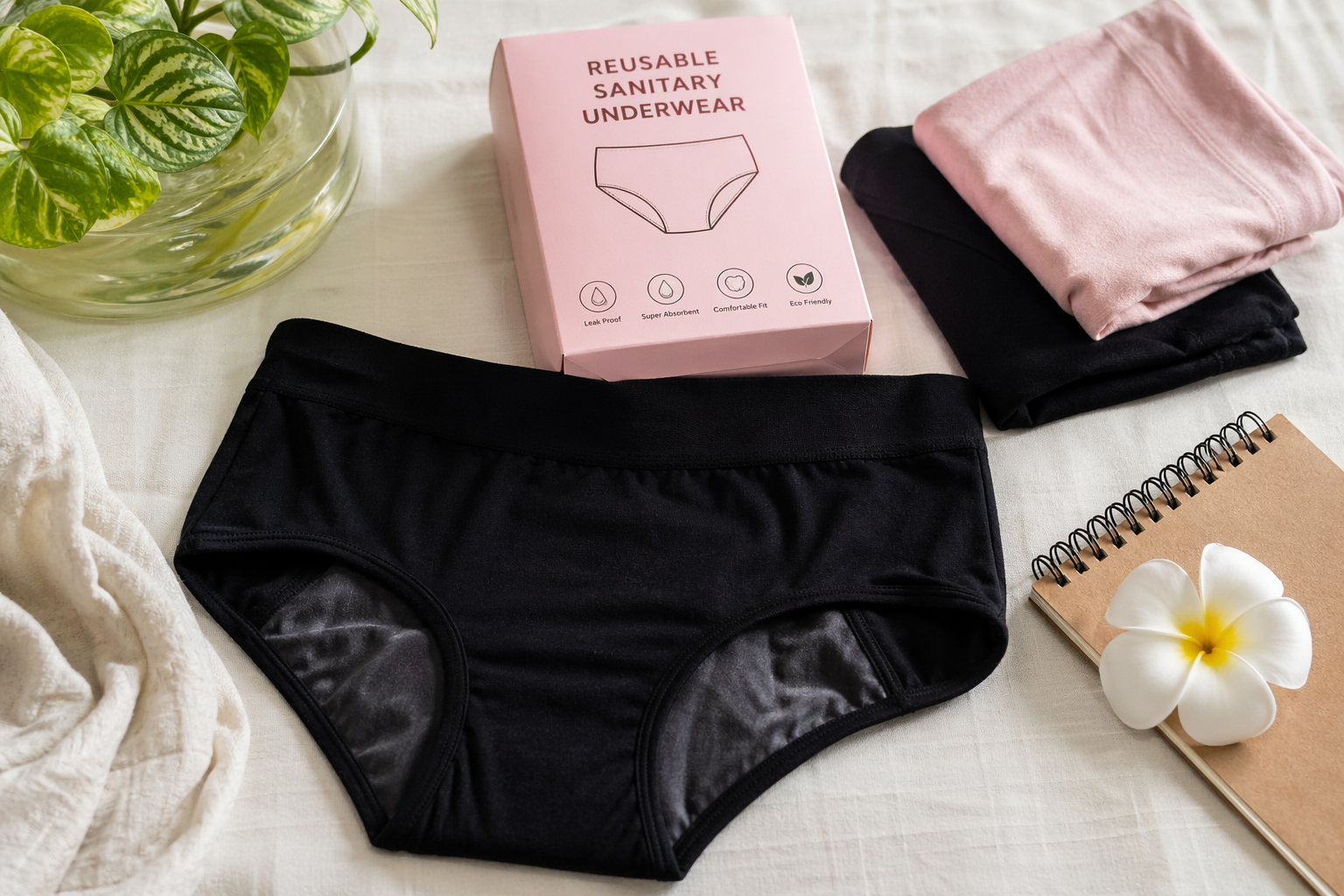
Period Underwear
Underwear built to absorb flow on its own. Washable, comes in different absorbency levels, and works either alone or as backup with another product. Comfortable for a lot of people, though flow and body shape decide how well any given pair actually performs.
Reusable Menstrual Discs
Similar idea to cups but sits differently. Reusable, washable, and worth following the manufacturer's instructions closely, since fit and care vary more between brands than people expect.
How Reusable Menstrual Products Can Reduce Period Waste
They Can Replace Repeated Single-Use Products
The whole difference comes down to what happens after use.
Disposable: use it → bin it → buy another one
Reusable: use it → wash it → use it again
Disposable products always end the same way — in the trash, with a replacement needed. Reusable ones skip that step, at least until the product itself finally wears out.
They Can Reduce the Number of Products Sent to Waste
Because a reusable product doesn't get tossed after one use, it can stand in for a lot of disposable ones over its life. How many depends heavily on the product and how long it actually stays usable — no fixed number applies to everything, and anyone throwing out a specific figure is probably guessing.
They Can Reduce Packaging Waste
Disposables come wrapped, boxed, and shipped constantly — every purchase means more packaging. Reusables get bought far less often, so that packaging waste shrinks too, simply because there's less buying going on.
They Encourage a Reuse-Based Period Routine
Switching to reusables tends to change how people think about the rest of their routine too — more washing and keeping, less buying and binning. It's a small shift, but it usually spreads beyond just period care once it becomes a habit.
Environmental Benefits of Reusable Menstrual Products
Less Repeated Product Disposal
Fewer things get thrown out because fewer things get used up and replaced. That's the most straightforward win reusables offer.
Potential Reduction in Plastic Waste
Here's where a lot of marketing oversells it. Reusable products don't magically remove plastic from the picture — some period underwear and pads still use plastic in the lining or waterproof layer. What's fair to say: switching to reusables usually means buying fewer plastic-containing disposables overall, which cuts down that specific kind of waste over time. That's a real benefit. "Zero plastic" is not.
Less Packaging Waste
Buy less often, generate less packaging. Not complicated, just less frequent.
Supporting a More Circular Approach to Period Care
Reuse, durability, a longer life for each product, responsible disposal at the end — that's a more circular pattern than buy-use-toss-repeat every single cycle.
Are Reusable Menstrual Products Really Eco-Friendly?
They can be, but it's not automatic. It comes down to materials, how they're made, how long they last, how they're washed, and how they're eventually disposed of.
Factors That Improve Sustainability
Lasts a long time
Made from solid, durable material
Manufactured responsibly
Minimal packaging
Properly cared for
Actually gets used regularly, not left in a drawer
Factors That Affect Their Environmental Footprint
How it's manufactured
Water used for washing
Energy for washing and drying
Detergent
How often it needs replacing
What happens to it at the end of its life
Calling reusable products "eco-friendly" full stop is a stretch. They sit on a spectrum, and where a specific product lands depends on all of the above — not on the word "reusable" printed on the packaging.
How to Choose Reusable Menstrual Products
Consider Your Menstrual Flow
Flow varies, so the product should match it. Light flow, heavy flow, somewhere in between — one product doesn't fit all of that.
Look at the Materials
Worth checking before buying:
What it's actually made from
How it's constructed
Care instructions
Who makes it
Check Product Lifespan
Don't trust a random number floating around online. Go by what the manufacturer actually says, since lifespan really does vary between products and materials.
Consider Washing and Care Requirements
If the washing routine feels like too much hassle, that's worth being honest about upfront. A reusable product only works if it actually gets washed and cared for — otherwise it just sits in a drawer.
Choose the Right Size and Absorbency
No universal right answer here. What works for one person's body and flow won't necessarily work for someone else's.
How to Care for Reusable Menstrual Products
Follow the Manufacturer's Washing Instructions
Start here, always. Care routines aren't identical across every product, so don't assume.
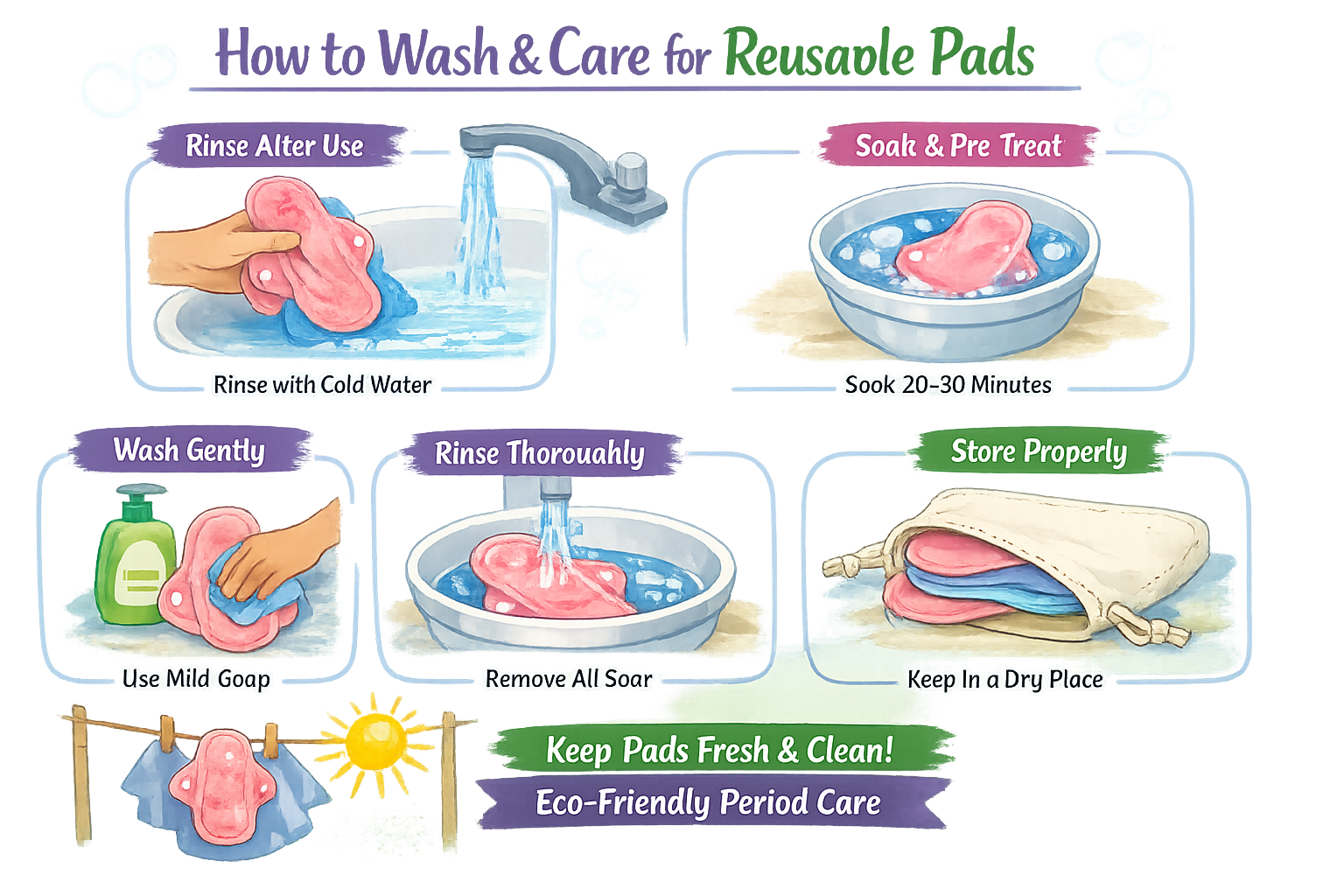
Wash Products Thoroughly
Wash after every use. Skipping this, or half-doing it, is usually where things go wrong — smell, buildup, shorter lifespan.
Dry Products Properly
Fully dry before storing. Damp storage is a common mistake and it causes problems fast.
Store Clean Products Correctly
Clean, dry, breathable storage. A sealed damp pouch defeats the purpose.
Know When to Replace a Reusable Product
Time to swap it out when there's:
Visible damage
It's not absorbing like it used to
The material is breaking down
Smell that won't go away even after washing
The manufacturer says it's past its recommended life
How to Switch From Disposable to Reusable Period Products
Start With One Reusable Product
No need to throw out the whole routine overnight. Try one thing first.
Use It Alongside Your Existing Products
Keeping a familiar backup around during the first few cycles makes the switch a lot less stressful.
Learn the Care Routine
Washing, drying, storing, carrying products around outside the house — give this some time to become normal.
Find What Works for Your Lifestyle
School, work, travel, workouts, overnight — what works in one setting might not work in another. Worth testing before committing fully.
Common Mistakes to Avoid With Reusable Menstrual Products
Skipping the care instructions — leads to bad results and shorter product life.
Half-washing — the single biggest reason people give up on reusables.
Storing them damp — causes smell and material issues.
Wrong size or absorbency — leaks, discomfort, frustration.
Assuming one product fits everyone — it doesn't; bodies and flows differ.
Picking purely on "sustainability" and ignoring comfort — a product nobody wants to use isn't actually helping anyone.
Who Can Benefit From Reusable Menstrual Products?
Works well for a lot of people, including:
Teenagers figuring out what suits them
College students watching their budget
People with full-time jobs who want something low-maintenance
Frequent travelers tired of restocking
Anyone trying to cut down household waste
People just looking for a reusable option in general
Not a fit for absolutely everyone, though. Access to washing facilities, comfort, and personal preference all matter, and pretending otherwise doesn't help anyone make a good decision.
How to Build a Sustainable Menstrual Hygiene Kit
A decent kit usually includes:
Reusable sanitary pads
Period underwear
A cup or disc, if that's the preference
A small washable pouch for storage
Spare underwear
Whatever cleaning supplies the product needs
A way to dispose of anything damaged or worn out
A solid menstrual hygiene kit makes sticking with reusables a lot easier — home, work, or on the road.
Frequently Asked Questions
Do reusable menstrual products reduce waste?
Yes, generally. They're built to be used again instead of thrown out after one use, so fewer products get discarded overall. How much they actually help still depends on the material, how it's washed, and how long it lasts.
Are reusable menstrual products better for the environment?
Often, yes — but not automatically. Material, manufacturing, water and energy for washing, and how long the product actually lasts all factor in. A poorly made reusable product isn't automatically better than a well-made disposable one.
How long can reusable menstrual products be used?
Depends entirely on the product, material, and how it's used and cared for. Best to go with what the manufacturer says rather than a number picked up somewhere online.
Are reusable sanitary pads hygienic?
Yes, as long as they're washed, dried, and stored properly. Skip any of those steps and hygiene starts slipping.
How do you wash reusable menstrual products?
Wash thoroughly after each use, dry completely before storing. Manufacturer instructions should always win over general advice, since products differ.
What are the most common reusable menstrual products?
Reusable sanitary pads, menstrual cups, menstrual discs, and period underwear.
Final Thoughts
Periods come back every month, so the waste does too — that part's not up for debate. Reusable products genuinely cut down on repeated disposal by swapping a pile of single-use items for one product that gets washed and used again. But calling them a perfect fix would be dishonest. The real impact depends on the whole life of the product — how it's made, how long it lasts, how it's washed, and what happens to it at the end.
Honestly, the switch is worth it for most people who stick with the care routine — the ones who give up usually do it in the first month, before the washing feels normal. After that, it tends to just become part of the routine. In the end, it comes down to comfort, hygiene, lifestyle, and how much the waste question actually matters to the person using the product.
For anyone curious where to start, ReliefPad offers reusable sanitary pads that fit into a familiar period-care routine while helping reduce reliance on single-use products.

Write a comment ...